
Hot water heater failure · Raised foundation · Original hardwood floors and plaster finishes preserved
When the homeowners called us, they had one non-negotiable: the original white oak floors were staying. They’d been in that house for a century. They weren’t replaceable. Most companies would’ve said sorry and pulled them up on day one. We said we’d find another way — and we did.
WHAT WE WERE DEALING WITH
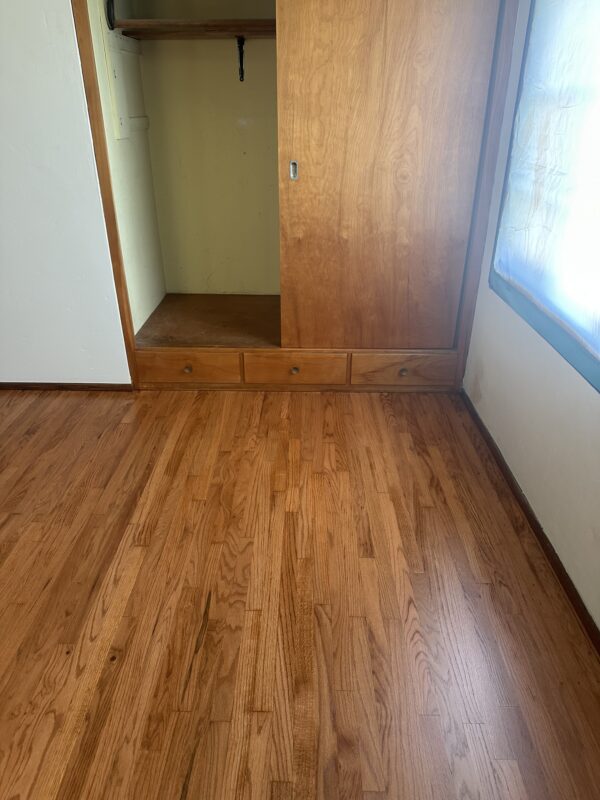
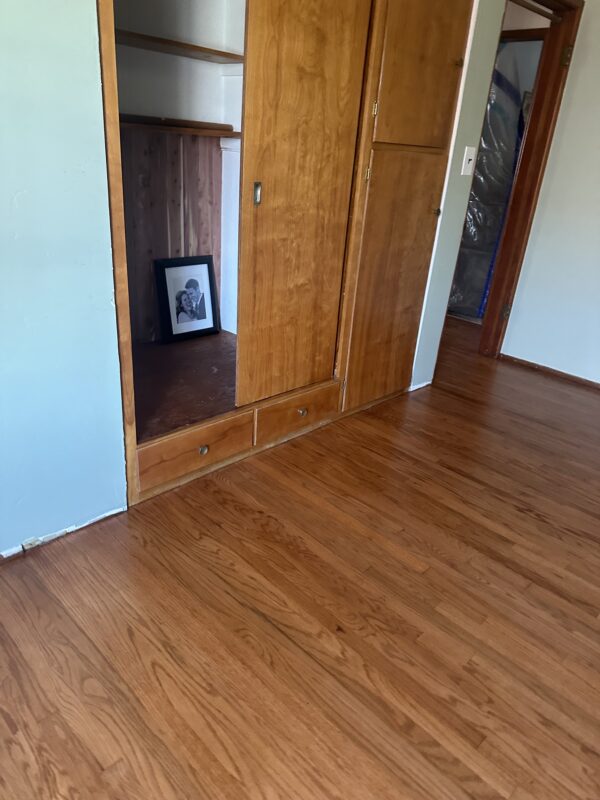
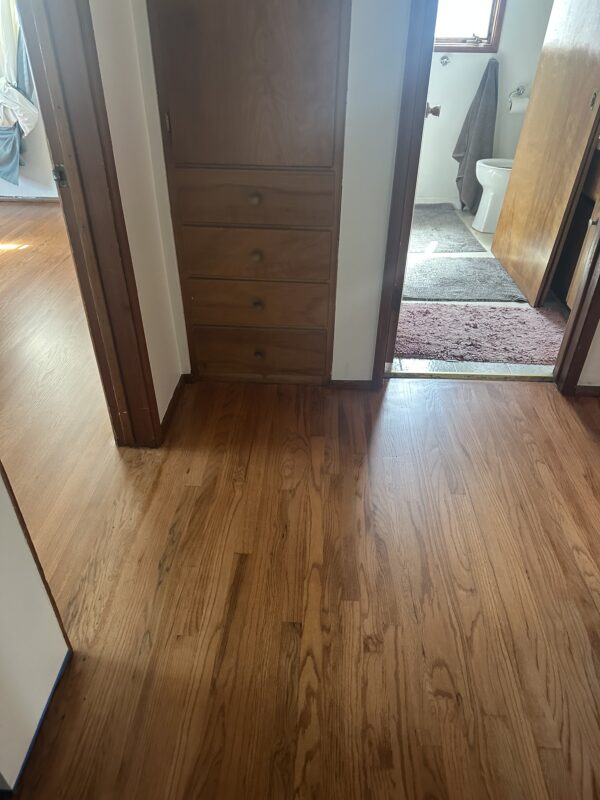
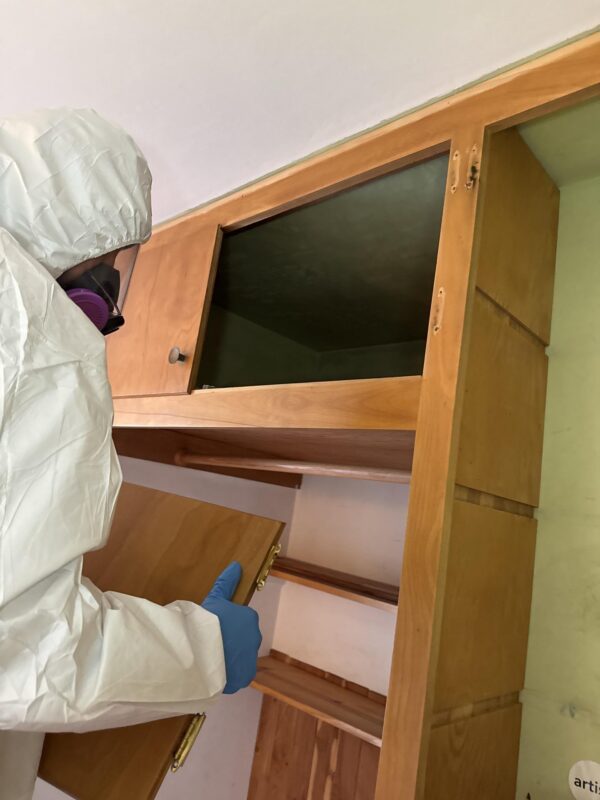
A hot water heater failed in a three-bedroom home in Anaheim’s historic district — a 100-year-old property on a raised foundation with original white oak hardwood floors, original oak casing and baseboards, and original plaster wall finishes throughout. Water had spread through two bedrooms, the hallway, and a water closet that needed significant reconstruction. The crawlspace under the house had taken on moisture too. The homeowners’ instructions were clear: the floors don’t come up.
Here’s How We Did It
1. We Dried From Both Directions at Once
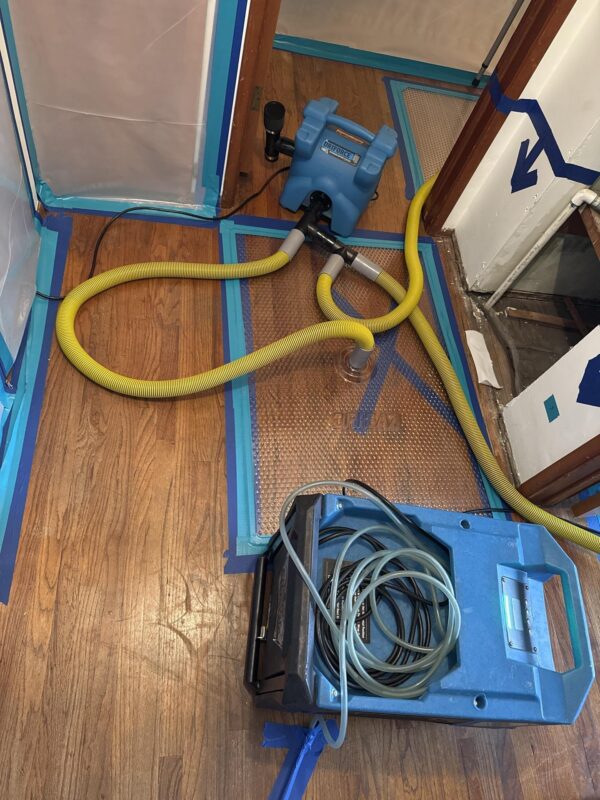
Standard practice when hardwood floors get soaked is to pull them up, dry the subfloor, and replace them. We don’t always accept that as the only option. We set up drying equipment in the crawlspace to draw moisture upward from below, while simultaneously managing airflow and temperature from above. Drying from both directions at once is harder to execute — it requires constant monitoring — but it’s the only way to save floors like these without removing them.
2. We Kept the Heat Down Deliberately
Here’s something most people don’t know: dehumidifiers generate heat. In a crawlspace, that heat rises directly into the floor above. With 100-year-old white oak, too much heat means cupping, buckling, or cracking — the exact damage we were trying to prevent. We ran the whole drying process cooler and slower than a typical job. We checked moisture readings in the floor multiple times every day. It took longer. But every single board came through flat and stable.
3. We Sanded and Refinished the Original Oak
Once the floors hit target moisture content and stayed there for 48 hours, we sanded them down and refinished them. The original oak casing and baseboards got the same treatment. The finished floors looked exactly like what they were — a century-old hardwood floor that had just been refinished. That’s the goal.
4. We Matched the Original Plaster Finish
New drywall with a smooth finish would’ve looked completely out of place in this home. Original plaster has a texture and character that standard drywall finishing doesn’t replicate. We applied a skim coat and hand-textured topcoat, then painted to the original colors. You can’t see the seam between old and new. That’s the point.
5. We Rebuilt the Water Closet to Match the Home
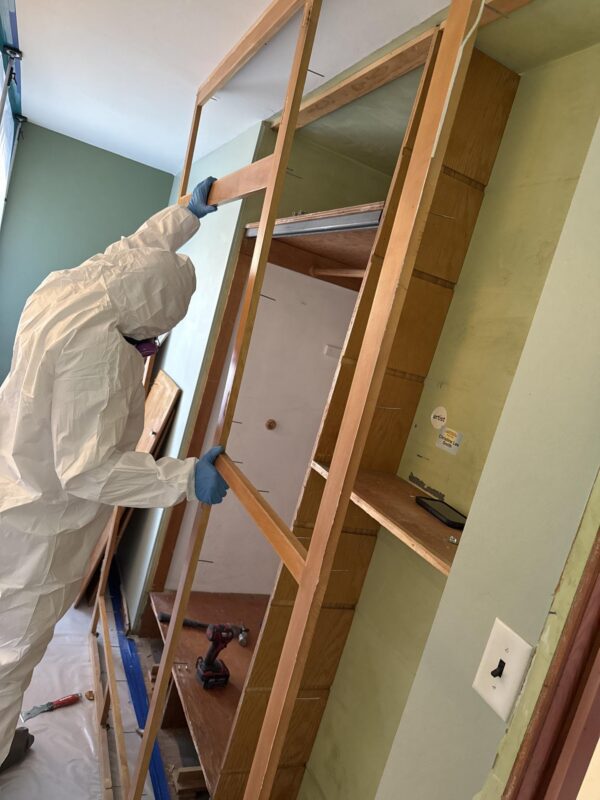
The water closet needed significant reconstruction. We rebuilt it completely — keeping the period-appropriate details intact. The trim profiles, the proportions, the hardware style. Nothing generic.
6. We Packed Out All Their Contents and Brought Them Back
One bedroom was a home office. There was nowhere to stage everything while we worked. We did a full packout — inventoried every item, wrapped it carefully, and moved it to our secure facility. When the job was done, we brought it all back and helped them settle in. Start to finish, one company handled it.
7. New Water Heater and a Top-to-Bottom Final Clean
The water heater that failed got replaced as part of the scope. After reconstruction was complete, we did a full clean of the entire home before handing it back to the owners. Walk in, it’s done, it’s clean, it’s right.
Outcome Stats
100% — Original oak floors saved — not one board removed
0 — Warped boards — precision drying, properly done
6 — Services on one project, one company
100yr — Historic home — original character fully intact
“They trusted us with something that couldn’t be replaced. That’s not a responsibility we take lightly — and it’s exactly what we built this company to handle.”